
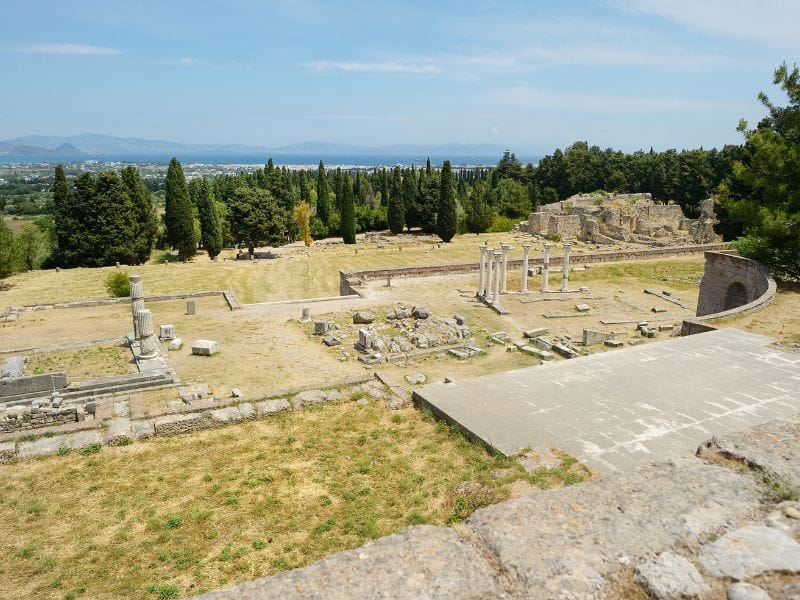
At the Asclepieion of Kos, pilgrims from across the ancient world climbed marble staircases hoping for cures beyond mortal reach. Here, ancient greek medicine in Kos took shape, blending sacred rites with pioneering treatments that would inspire generations of healers.
This sanctuary was more than a temple — it was a crucible where myth and empirical observation forged the foundations of modern medicine.
Central to the Asclepieion’s renown were the Asclepiads, hereditary priest-physicians who claimed descent from Asclepius himself. These skilled healers combined religious devotion with practical medicine.
They performed surgeries, treated wounds, prepared herbal remedies, and interpreted the mysterious dreams experienced by patients during incubation. By meticulously observing patients’ symptoms, they began the revolutionary practice of systematic diagnosis and treatment, creating the roots of scientific medicine.
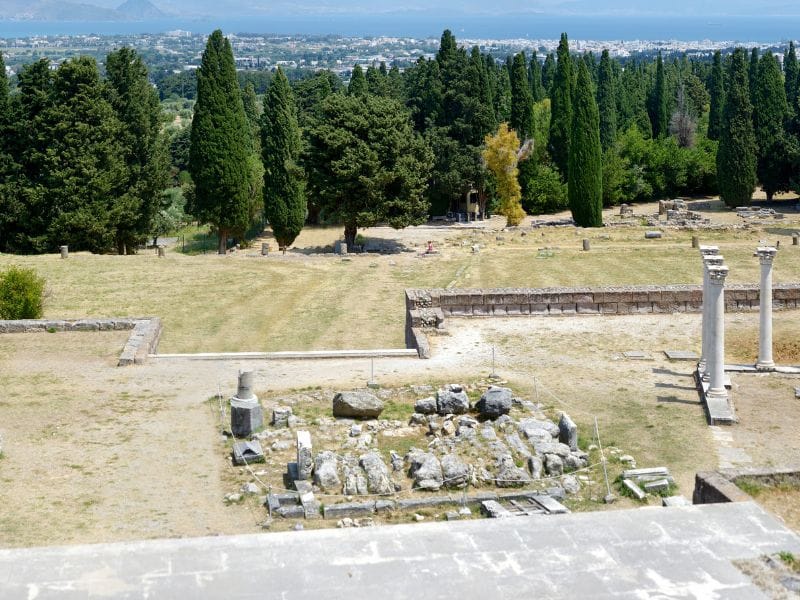
One of the most fascinating practices of ancient greek medicine in Kos was enkoimesis, the ritual of incubation. After prayers and sacrifices to Asclepius, patients slept in the Abaton, a sacred dormitory designed to induce healing dreams.
In these visions, Asclepius or his daughters — like Hygieia and Panacea — appeared to reveal treatments or, according to myths, performed miraculous cures themselves. The high priest interpreted these dreams, crafting individualized therapies that blended divine guidance with practical care.
Healing at the Asclepieion depended heavily on the rich pharmacopoeia of the Greek world. Physicians used honey for wound care, willow bark for pain relief, mint for digestive issues, and dozens of other herbs sourced from Kos’ hillsides and gardens.
This deep knowledge of plants, gathered and refined over generations, became a cornerstone of Hippocratic medicine. Many of these natural remedies remain part of modern herbal medicine today, highlighting the enduring legacy of ancient greek medicine in Kos.
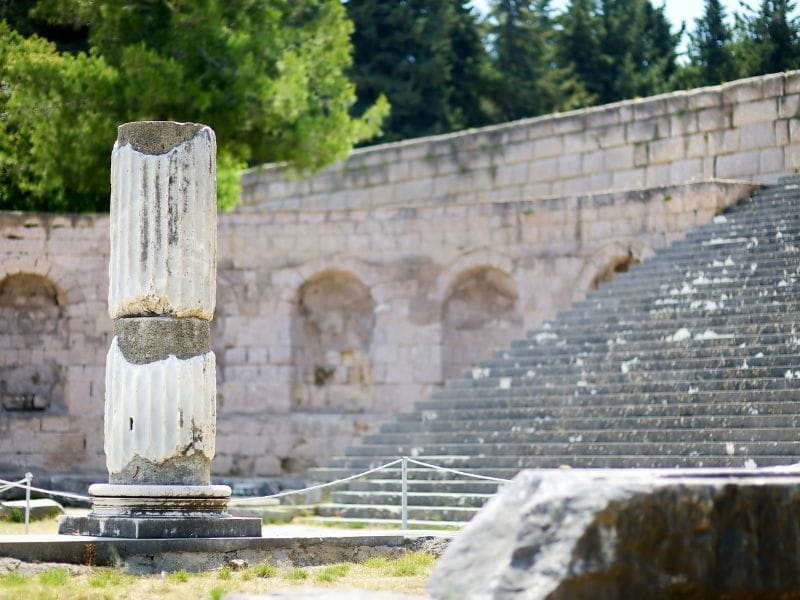
Hygiene was a crucial element of treatment at the Asclepieion. Purification rituals required patients to bathe before beginning their healing process, aligning with Hippocrates’ emphasis on cleanliness as a foundation for health.
The sanctuary’s advanced waterworks supplied fountains, latrines, and elaborate Roman baths with fresh spring water from Kokkinonero and Vourina, ensuring pilgrims could cleanse themselves physically and spiritually. These innovations reflected a sophisticated understanding of sanitation far ahead of their time.
Perhaps the most striking contribution of the Asclepieion to medicine was its practice of inscribing medical cases on marble tablets. These records detailed patients’ ailments, the dreams they experienced, and the treatments prescribed — forming some of the earliest known medical charts in history.
Preserved fragments of these inscriptions, still visible in Kos and displayed in museums, offer unique insight into the illnesses and cures of antiquity. They also demonstrate how ancient greek medicine in Kos laid the groundwork for clinical observation and case studies.
Through the practices honed at the Asclepieion, medicine in Kos evolved from superstition to a discipline grounded in systematic observation. By emphasizing empirical study and patient-specific care, the Asclepiads and Hippocrates transformed the healing arts into a science.
This shift from divine punishment to natural causation redefined the understanding of illness. The ethical principles taught at Kos, enshrined in the Hippocratic Oath, continue to guide doctors worldwide, proving that the sanctuary’s influence transcends time.
The Asclepieion of Kos remains a testament to the power of combining faith, nature, and rational inquiry in the pursuit of health. By exploring the sanctuary’s stones and stories, visitors today walk in the footsteps of ancient doctors who dared to look beyond superstition.
The lessons of ancient greek medicine in Kos remind us that compassion, observation, and respect for the natural world are timeless keys to healing — lessons as relevant now as they were over two millennia ago.
We use cookies to improve your experience on our site. By using our site, you consent to cookies.
Manage your cookie preferences below:
Essential cookies enable basic functions and are necessary for the proper function of the website.
Stripe is a payment processing platform that enables businesses to accept online payments securely and efficiently.
Service URL: stripe.com (opens in a new window)
WooCommerce is a customizable eCommerce platform for building online stores using WordPress.
Statistics cookies collect information anonymously. This information helps us understand how visitors use our website.
Google Analytics is a powerful tool that tracks and analyzes website traffic for informed marketing decisions.
Service URL: policies.google.com (opens in a new window)
SourceBuster is used by WooCommerce for order attribution based on user source.
You can find more information in our Privacy Policy and Privacy Policy.