
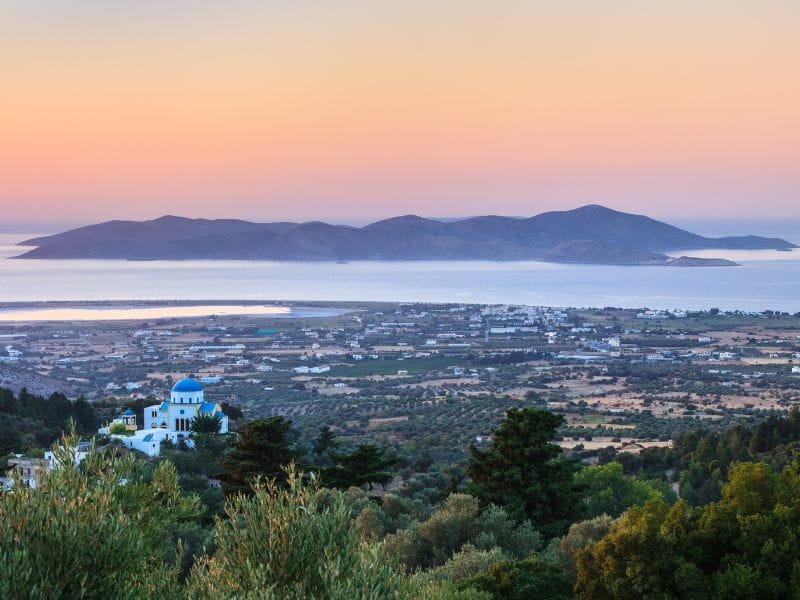
Kos is full of surprises. Everyone talks about the Asclepieion, but the island’s ancient charm doesn’t end there. Just beyond the sanctuary lie traces of cities, homes, and temples that reveal how people once lived, healed, and worshipped.
Walking through the Archaeological Sites Around the Asclepieion feels less like visiting ruins and more like stepping into a conversation — one that began thousands of years ago and never really stopped. Every column, every mosaic, has something to say if you slow down long enough to listen.
A short walk from the Asclepieion, the Roman Odeon rises quietly among olive trees and modern streets. Built in the 2nd century CE, it once hosted speeches, plays, and concerts. You can still see the marble seats curving in perfect rhythm, and if you sit for a while, the air seems to hum — as if applause still echoes from centuries ago.
Climb to the top rows and look out. The view opens to the town below, its rooftops mixing with ancient stones. It’s easy to forget what century you’re in.
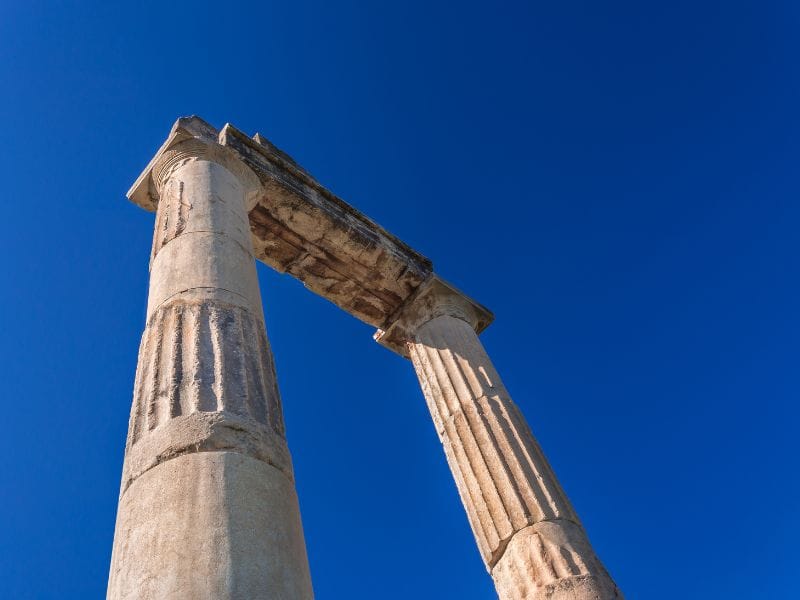
A few minutes away, the Casa Romana (the Roman House) offers a glimpse into how the wealthy once lived. The light slips through its open courtyards, bouncing off mosaics of dolphins and panthers. There’s something deeply peaceful here — like walking through someone’s memories.
You can imagine footsteps on the marble, laughter in the shade, the rustle of linen in a summer breeze. The Asclepieion may have been the island’s soul, but the Casa Romana was its heartbeat — elegant, warm, and unmistakably human.
Right in the heart of modern Kos stands the Ancient Agora, where trade, gossip, and philosophy all met under the same sky. Its columns now frame the sea beyond, and the scent of wild thyme mixes with salt air.
Here stood temples to Aphrodite and Hercules, and you can still trace the outlines of old workshops. It takes only a bit of imagination to see merchants setting up stalls or sailors bargaining over amphorae of wine. The Agora reminds you that cities never truly sleep — they just change shape.
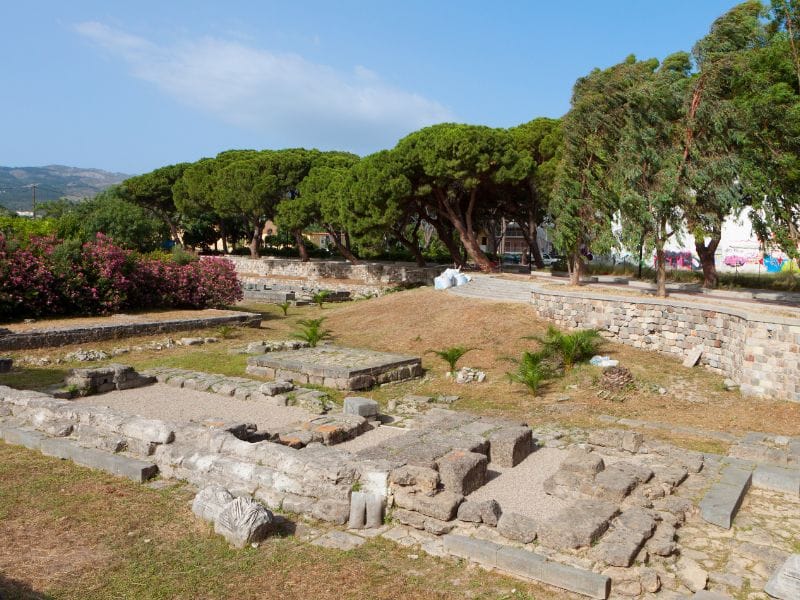
Further west, behind quiet streets and scattered ruins, lies the Western Archaeological Zone — a place that once bustled with homes, baths, and paved avenues. The mosaics still glimmer faintly in the sunlight, and you can trace the flow of daily life: where people walked, where they talked, where they dreamed.
It’s easy to miss this part of Kos if you rush, but it’s worth slowing down for. There’s a gentle silence here that feels more alive than noise.
Near the Agora, half-hidden among trees, you’ll find what’s left of the Altar of Dionysus, the god of wine and theatre. It’s modest now — just fragments — but close your eyes and you can imagine the sound of drums, laughter, and dancing torches.
This was where celebration became devotion, where people honored the divine through joy. Alongside the solemn calm of the Asclepieion, it shows the balance the ancients understood so well: healing needs both peace and pleasure.
If you plan your day right, you can see it all without hurry. Start early at the Asclepieion, when the light is soft and the air cool. Move on to the Roman Odeon and Western Archaeological Zone before lunch, then enjoy a break in town with grilled fish and a cold Koan wine.
Spend your afternoon wandering the Casa Romana, the Ancient Agora, and the Altar of Dionysus. As evening comes, find a spot by the harbor, order something sweet, and let the sunset do the storytelling.
The Archaeological Sites Around the Asclepieion are not just stops on a map. They’re moments — fragments of the same world that produced Hippocrates and the spirit of healing that Kos still carries.
You don’t just see history here; you feel it. The stones are warm from the sun, the air smells of herbs and sea salt, and for a brief while, you stand exactly where someone else once stood, centuries ago, looking at the same horizon.
That’s what makes Kos special: history isn’t behind glass — it’s right under your feet, waiting to be rediscovered.
We use cookies to improve your experience on our site. By using our site, you consent to cookies.
Manage your cookie preferences below:
Essential cookies enable basic functions and are necessary for the proper function of the website.
Stripe is a payment processing platform that enables businesses to accept online payments securely and efficiently.
Service URL: stripe.com (opens in a new window)
WooCommerce is a customizable eCommerce platform for building online stores using WordPress.
Statistics cookies collect information anonymously. This information helps us understand how visitors use our website.
Google Analytics is a powerful tool that tracks and analyzes website traffic for informed marketing decisions.
Service URL: policies.google.com (opens in a new window)
SourceBuster is used by WooCommerce for order attribution based on user source.
You can find more information in our Privacy Policy and Privacy Policy.