
The Ancient Architecture of Kos is quite special. You don’t just see it; you feel it. The cicadas make noise in the calm spots between the stones, and the wind smells like pine and sea salt.
Three terraces rise one above the other at the Asclepieion, and each one has its unique narrative. You take a few steps, stop, and then you’re walking through hundreds of years of design and commitment. It’s both a ruin and a revelation.
Even today, the first patio feels lively. This is where pilgrims came after long trips to find health or hope. It’s easy to see them walking through the big marble gate, the propylon, with their eyes full of hope.
The lovely, golden morning light still shines on the columns. I stood there for a time, watching the shadows move across the stone. It looks like the architects understood exactly how the sun would travel over time because everything is so well positioned and natural.
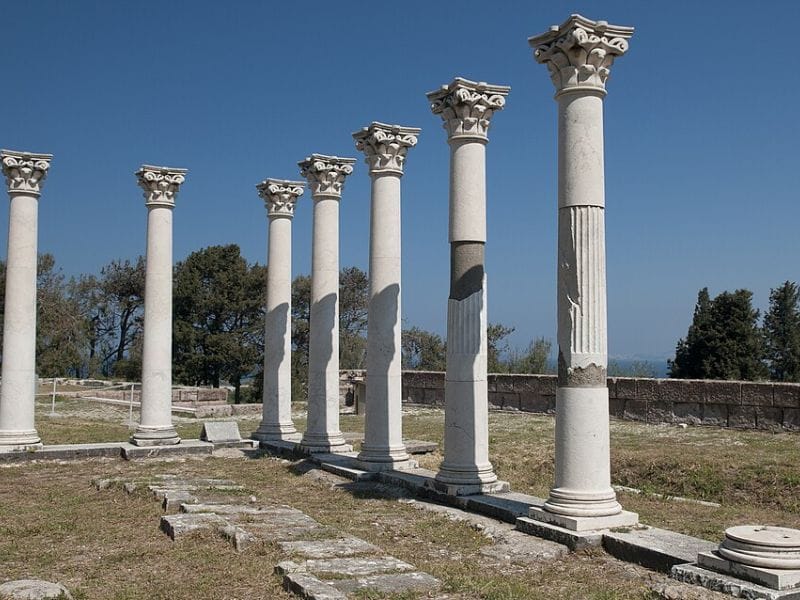
The mood changes completely when you go up a few steps. The vast altar of Asclepius and the mysterious Abaton, where people used to sleep and wait for dreams that could heal them, are the center of the sanctuary. You can still feel what this place used to mean, even though it’s silent now. The stoa is like a soft frame that goes all the way around. Its Doric columns cast patterned shadows on the ground.
There used to be water here too, coming from carved fountains that sparkled in the sun. I closed my eyes for a time and could almost hear it: the quiet drip, the prayers, and the rustle of robes.
The Doric Temple of Asclepius is still standing at the top. It’s beautiful, even in pieces. From up here, you can see a lot: the island below, the sea sparkling, and the coast of Asia Minor in the distance.
It feels like the sky and stone are talking to each other at this level. You see how well the temple fits in with its surroundings; every line and proportion is meant to mirror equilibrium. The Ancient Architecture of Kos isn’t just pretty. It was about peace between people, nature, and the divine.
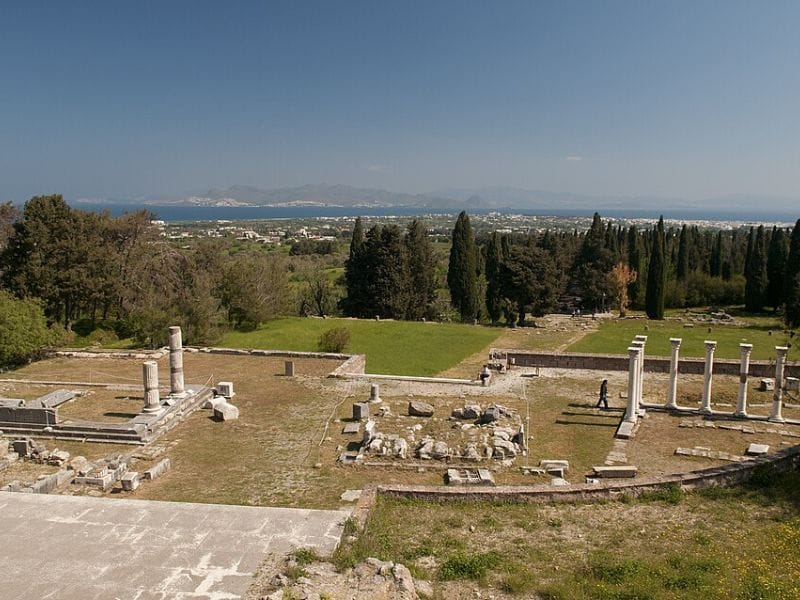
The Asclepieion is a great example of how advanced ancient Greek engineering was. There are retaining walls with arches, stairways that connect terraces without any breaks, and smart drainage systems. It’s all very amazing.
What fascinates me most is how it feels both planned and natural, as if the builders worked with the slope instead of against it. That could still teach modern architects something. The longer I went, the more I realized that this location is more than simply history; it’s a lesson in architecture that still works today.
Digging started here in the early 1900s and uncovered temples, altars, and a lot of minor objects, like inscriptions, figures, and pieces of mosaic. Every new finding adds to the plot.
Of course, nature and time are always trying to beat us. The terraces change, the stones wear away, but the sanctuary stays strong. I stood there and thought about how fragile everything looks, but these stones have survived longer than empires.
The whole hillside glowed gold when the sun went down. The terraces shone, and the sea below reflected the light. For a little time, everything was completely still.
That’s when I realized that the Ancient Architecture of Kos isn’t simply about temples or symmetry. It’s about how people used to try to connect with God via design. You can still feel that hunger in every column and stairway.
If you ever go, go around sunset. Be quiet. Let the light shine on the marble. The stones will speak for themselves.
We use cookies to improve your experience on our site. By using our site, you consent to cookies.
Manage your cookie preferences below:
Essential cookies enable basic functions and are necessary for the proper function of the website.
Stripe is a payment processing platform that enables businesses to accept online payments securely and efficiently.
Service URL: stripe.com (opens in a new window)
WooCommerce is a customizable eCommerce platform for building online stores using WordPress.
Statistics cookies collect information anonymously. This information helps us understand how visitors use our website.
Google Analytics is a powerful tool that tracks and analyzes website traffic for informed marketing decisions.
Service URL: policies.google.com (opens in a new window)
SourceBuster is used by WooCommerce for order attribution based on user source.
You can find more information in our Privacy Policy and Privacy Policy.