
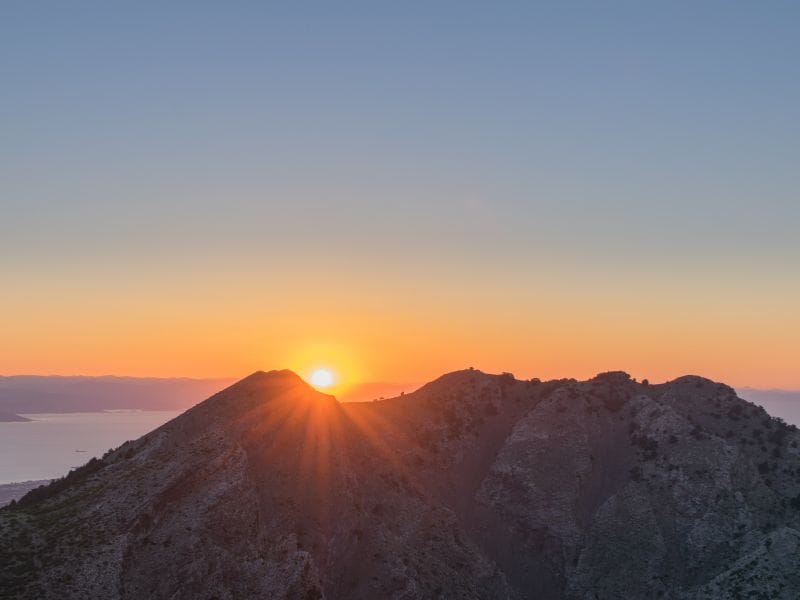
Kos might be known for its beaches, but step inland and the island feels different — quieter, greener, full of scent and silence. Hills roll into pine forests, paths curl around ruins, and suddenly you find yourself alone with the sound of cicadas and distant waves.
Hiking in Kos isn’t about speed. It’s about moments — the sunlight between trees, the stone chapels perched above the sea, and that strange peace that arrives when you stop and just look.
The trail up Mount Dikeos begins in the little village of Zia, where cafés smell of herbs and bread still warm from wood ovens. The path climbs gently at first, shaded by pines, then opens into rocky ground where the air thins and the wind becomes your only companion.
At the summit, the whole Aegean unfolds like a painting — Kalymnos in the north, Nisyros to the south, and the Turkish coast floating on the horizon. Most hikers stay a while, not to rest, but to listen. Even the silence here feels like history breathing.
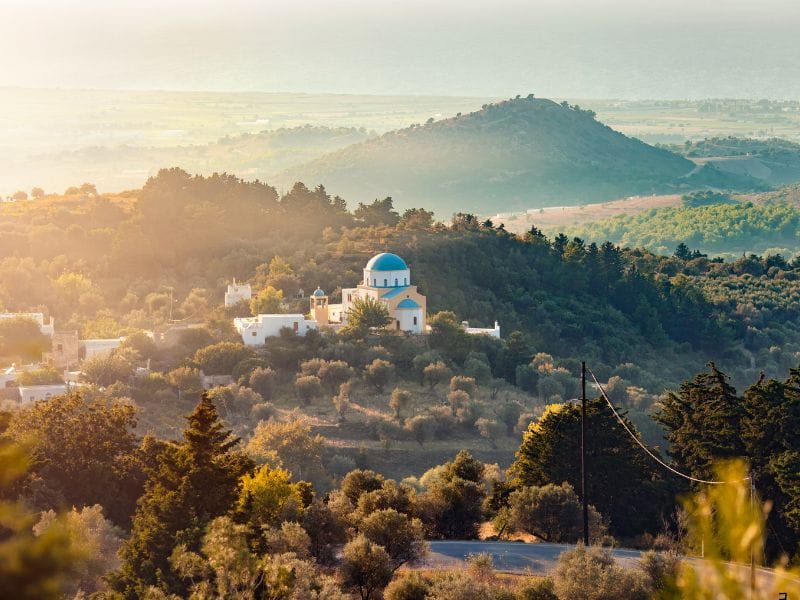
If you want a shorter route, walk up to the ruins of Palio Pyli. The trail starts near modern Pyli and snakes upward past wild thyme and fig trees. What’s left of the old village clings to the hillside — half-broken walls, a Byzantine chapel, a castle that has seen both crusaders and earthquakes.
From the top, the island stretches below you, silver in the sunlight. No crowds, no noise — only the wind, the scent of dust, and the sea glittering far away. It’s hauntingly beautiful, the kind of place you don’t talk much in.
Further down the slopes, paths weave through Asfendiou and its small hamlets — Lagoudi, Evangelistria, Zia. Chickens wander the lanes, cats nap on doorsteps, and old men wave from courtyards shaded by vines.
The trails here are simple but rewarding. They pass tiny chapels and olive terraces, following the rhythm of village life. In spring, wildflowers cover the ground, and the air smells of rosemary and earth after rain.
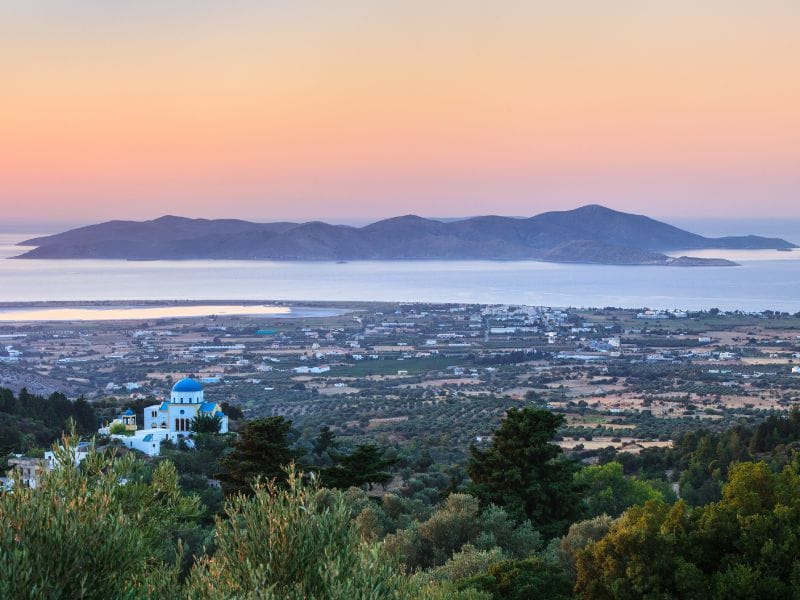
For something gentler, try the flat paths near Tigaki or Marmari. The dunes shimmer in the sun, and if you’re lucky, you might spot flamingos in the salt lagoons. You can walk for miles with the sea always beside you — blue, endless, sometimes rough, sometimes calm.
Stop at a taverna, order something cold, and let the day drift by. Hiking in Kos doesn’t always mean climbing; sometimes, it’s just walking slowly enough to see.
Hiking in Kos is to meet the island at its most honest. The sea views are a reward, yes, but the real gift is what happens along the way — the quiet, the scents, the feeling that you’ve touched something ancient. Long after you leave, you’ll still remember the sound of your steps on stone, and the way the wind from Mount Dikeos carried the island’s story to your ears.
We use cookies to improve your experience on our site. By using our site, you consent to cookies.
Manage your cookie preferences below:
Essential cookies enable basic functions and are necessary for the proper function of the website.
Stripe is a payment processing platform that enables businesses to accept online payments securely and efficiently.
Service URL: stripe.com (opens in a new window)
WooCommerce is a customizable eCommerce platform for building online stores using WordPress.
Statistics cookies collect information anonymously. This information helps us understand how visitors use our website.
Google Analytics is a powerful tool that tracks and analyzes website traffic for informed marketing decisions.
Service URL: policies.google.com (opens in a new window)
SourceBuster is used by WooCommerce for order attribution based on user source.
You can find more information in our Privacy Policy and Privacy Policy.